Balancing readability structure and artistic freedom is the beauty of fluidity with Semi-Cursive Script in Chinese Calligraphy.

Semi-Cursive Script in Chinese Calligraphy

With Chinese calligraphy traditionally categorized into five main script styles. Each script style carries its own historical and artistic significance, offering different levels of formality, readability and expressiveness.

Cursive and Semi-Cursive Scripts


Among the mainstream types of Chinese calligraphy, cursive (草书, cǎoshū) and semi-cursive (行书, xíngshū) scripts in Chinese Calligraphy stand out for their fluidity and dynamic movement. Unlike the more structured standard script (楷书, kǎishū), they offer a unique blend of speed, elegance, and personal expression.

While Cursive script is the most free-flowing and expressive form, it often simplifies or omits strokes in connecting characters, prioritizing speed and efficiency. The exaggerated brush movements renders its highly artistic and also difficult to read at times.

Structure and Flow of Semi-Cursive Script


For this reason, Semi-cursive script, or running script, serves as a bridge between cursive and standard script. It retains the readability of the latter while incorporating the fluidity of former. Unlike cursive script, where strokes may be drastically altered or omitted, semi-cursive maintains a logical structure, making it more accessible for everyday writing. The brush leaves the paper less frequently than in standard script, creating a smooth and rhythmic flow. A popular choice for artistic and practical applications.

While both cursive and semi-cursive scripts emphasize fluidity, their differences lie in legibility, stroke connection, and artistic freedom. And both styles provide a gateway to deeper appreciation of Chinese culture and artistic tradition.

To learn more or practice Semi-cursive script writing in Chinese Calligraphy, click button to enrol in our classes.

A Summary of Script Styles in Chinese Calligraphy

Besides Semi-Cursive (行书, Xíngshū), there are 4 other Main Types of Chinese Calligraphy Scripts. Each script style carries its own historical and artistic significance, offering different levels of formality, readability, and expressiveness.
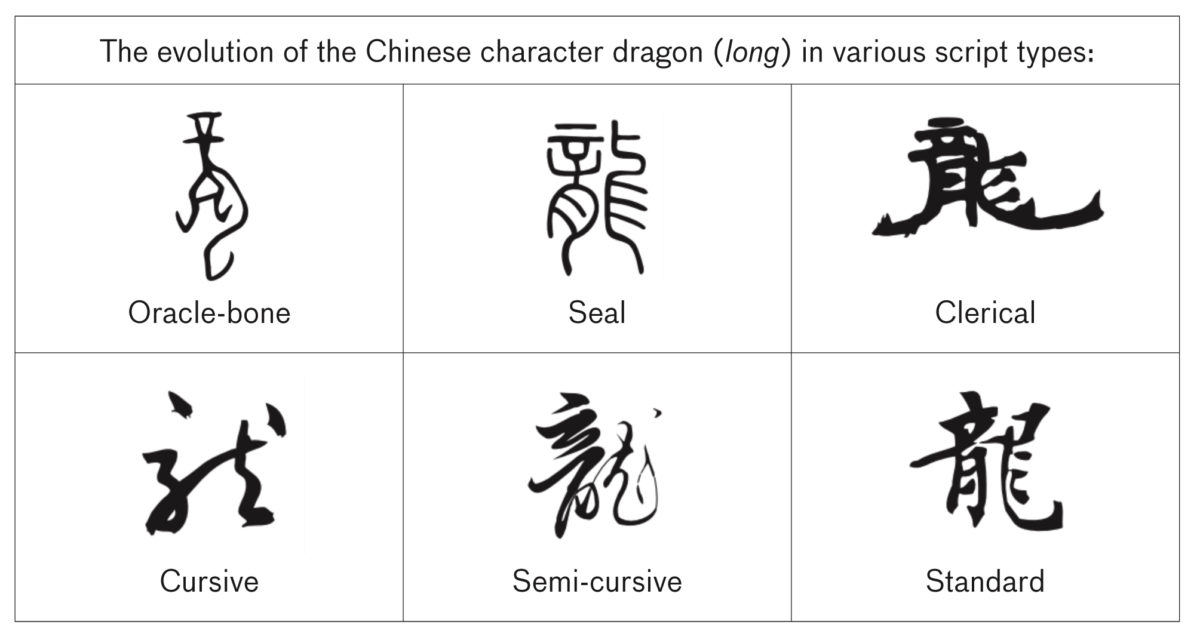

Seal Script
(篆书, Zhuànshū)

The oldest style, used in ancient inscriptions and seals.

Characterized by rounded, symmetrical lines and uniform thickness.

Examples: Small Seal Script and Large Seal Script.


Clerical Script
(隶书, Lìshū)

Emerged during the Han dynasty.

Recognizable by flat, wide strokes and distinct wave-like “silkworm head and wild goose tail” forms.

More structured and legible than Seal Script.


Regular Script
(楷书, Kǎishū)

Also known as Standard Script.

Precise, square-shaped characters, often used for printed texts and learning.

Ideal for beginners due to its clarity and balanced form.


Cursive Script
(草书, Cǎoshū)

The most fluid and expressive style.

Characters are highly simplified or merged; often hard to read without practice.

Used for personal expression and artistic works.

The 5 Major calligraphic scripts that developed in China. (Asian Art Museum)

Ready to Begin ?

Join our community today to learn and immerse yourself in the beautiful world of Chinese calligraphy.

Shopping Cart
Scroll to Top